Nutritional Benefits of Acorn Finished Pork
Finally, acorn-finished pork is tastier and healthier for the consumer. For decades, pork has been marketed as “the other white meat” due to the extreme leanness of factory-farmed pork. Acorn-finished pork, on the other hand, is deep red and well marbled with fat. Depending on the breed, many acorn-finished hogs even develop the famous “fatback” – 3 inches or more of fat from the pig’s back that was once considered a delicacy.
Interestingly, even though acorn-finished hogs are fattier than confinement-raised hogs, their meat is healthier. Studies of Spanish pata negra pork have found that the fat they produce is largely unsaturated, often to the point of being liquid at room temperature, and that it is extremely high in healthy omega-3 fatty acids and oleic acid, a monounsaturated fat that is also known to lower LDL (“bad”) cholesterol and raise HDL (“good”) cholesterol. In fact, the pigs are sometimes called “olive trees on four hooves” because the health benefits are similar to olive oil!
Oak trees are plentiful and fruitful in most eastern hardwood forests. Their fruit—acorns—are a traditional symbol of abundance. As soon as I read that pigs eat acorns, and that indeed the practice of fattening pigs on acorns is a time honored American and European tradition going back at least to Homer, I knew I had stumbled onto something good. Most summers the acorns in our woods are more plentiful than the squirrels, deer, and miscellaneous other mammals will ever consume. Many acorns end up simply returning, through decomposition, to the earth from which they came. This is where my pigs come in: they forage for these acorns, turning this naturally abundant feed into quality pork.
And quality it is. Many consider acorn fattened pork to have the best taste, and now scientific research is revealing its superior nutrition.
------------
Guernica in Reina Sofia
----------------------
The commodities that dominate in Almeria are tomatoes, peppers, eggplants, cucumbers, muskmelons, and, to some degree, watermelons. The area is known for its extremely arid climate, its available sunshine, and a large influx of new growers to the area. Almeria is potentially the next and possibly the greatest threat to Florida tomato producers for mid-winter competition
Almeria produces some 30 different vegetable species. Most of the producers are family-owned greenhouse operations and have low capital investments, generally producing on the average of about 2.5-3.5 acres (Fig. 1). Approximately 90% of the cultivation for tomato production is still being done by sand culture. This culture utilizes sand, gravel, and manure, and most growers use drip irrigation.
At present, approximately half of the total production from this area is exported to the European Union, especially Germany, France, and the Netherlands
Throughout Andalucia the major sources of income are from agriculture, tourism, and white marble. Agriculturally, citrus and greenhouse vegetable production are most important. Previously, agricultural production was based solely on grapes and citrus.
In Almeria, Spain, vegetables are generally grown as two types of crops, which are called winter crops, such as tomato, pepper, cucumber, and certain squashes, and summer crops, such as various muskmelons, watermelons, and green beans. The production peaks are December-January wherein tomato, cucumber, green beans, and pepper are harvested, and then again in May-June where many of melons, especially Galia-type melons are harvested. Tomatoes and sweet pepper represent the greatest acreage and are followed by watermelon and muskmelon (Galia melon). Presently, for tomatoes the most important cultivar is long-shelf-life tomato “Daniella,” which represents about 80% of the total production. In the Netherlands, tomato, sweet pepper, and cucumber are the most important vegetable crops.
Producers use a lot of temporary labor, especially from African countries
. Certain eastern European groups are also migrating to south Spain for work. Recently there have been clashes between growers and especially the Moroccan immigrant, due to poor working and living conditions for the foreign laborer. Several growers have faced strikes, and labor issues appear to be some of the greatest problems facing producers in the area
The major difference between Almeria and the Netherlands relates to the fact that in Spain energy costs are low and production costs are low, primarily due to the natural climatic conditions of good temperature and good light. Also, greenhouse production costs in Spain are considerably lower than those of the Netherlands, since many of the greenhouses are homemade and all are primarily made of plastic.
Puente Nuevo
The Puente Nuevo (New Bridge) is the focal point of Ronda. Construction for the bridge was started in 1759 and took 34 years to build. It spans the 390 ft gorge over the Guadalevín River and divides the city of Ronda into New Town and Old Town.

There’s a small room inside the bridge above the middle arch that was once used a prison and torture chamber. Captured opponents were thrown from the windows to the rocks at the bottom of the El Tajo gorge.

There’s now a museum inside the chamber that you can visit if you want to check it out!

https://foodlovertour.com/
in Madrid, it’s time to hop over to the El Corte Inglés in Callao and check out the Gourmet Experience. Covering 1500 square meters on the top floor on the department store, foodies have been heading to this spot since 2012.
La Máquina is the place to go to try Spanish cuisine and tapas classics.
both locals and tourists alike flock to the Gourmet Experience is for the breathtaking views of Madrid’s Gran Via.
Spain's version of a one stop shop. There are plenty of El Corte Ingles around the Madrid area that we stayed. They are very large and about 3x the size of a typical department store. It's as if a grocery store, best buy, food court, and department store had a small baby. I had fun walking around and browsing, and ended up on the top floor at this particular location to get an amazing view of the Madrid skyline.
Awesome view from the 9th floor gourmet market! I went straight up there so not sure about the rest of the store but the food area was amazing with lots of fun gift items that I'll have to go back for. Food vendors all looked decent and I would have eaten there had I not had plans to go to another restaurant.
Head up to 9th floor for great views over city and decide whether you want pad Thai, Italian, grilled fish or meat, and many other options, or just coffee.
We followed recommendations to visit the restaurant on 9th floor. It was like a upper tier food court with wide range of food and drinks. Self serviced. There is a grill, salad bar, Asian, Italian, sandwich, Spanish ham, paella, etc. Many drinks incl wine, draft beer, soft drinks, coffee and a bar. The view of the plaza Catalunya was amazing! If you get a table by the window, great to enjoy the food and view escaping from the heat outdoor. It is very reasonably priced we spend about EUR10+ per person.
--------------
Reviewed May 30, 2019 via mobile
Our hotel reception ( AC Hotel Atocha) recommended this restaurant. What a find! Not a place you would ever find as a tourist but so good that we ate there twice. For our first visit we chose “a la carte” with a delicious steak (well half a cow) for my wife and rabo de toro for me. I have not eaten ox tail since I was a boy. What a rich feast it was. Full of flavour. Our second visit was for a selection of sharing dishes. Very different but still good food. Throughout everyone was friendly and the service was good.
Reviewed June 12, 2019
We started out eating breakfasts here in what looked to be a little cafe. We just asked for what we wanted and were given very good breakfasts. We were tired at night at noticed tables on the street by the restaurant. It turned out to be a lovely place for dinner with excellent service and very good food. We were staying at the AC Hotel around the corner where the breakfasts were 3 times as much as this place and where they didn't serve dinner.
Reviewed June 29, 2019 via mobile
I generally have found the area around the Atoche Renfe train station to be a bit of a food desert until I discovered As Fontes. The place is favored by locals who go for the daily special often around 12 euros and includes a huge appetizer, main course, dessert and drink including wine.
The large menu has English. Service was attentive and there are lots of sidewalk tables.
my wife ordered seafood soup (10.00€) and I the Galician stew (8.50€) as the first course. We should have just ordered one to share as each came in a pot to ladle out. Both were delicious. The seafood soup had a lot of calamari, the stew was beans, sausage, ham, delicious broth.
They do not count the wine you drink
Mesón Restaurante As Fontes
Lush, green Galicia in northwestern Spain is famous for its excellent cuisine, especially its seafood. However, you don’t need to travel quite so far to enjoy fabulous Galician food in Madrid! Mesón Restaurante As Fontes proudly serves traditional Galician dishes made using the finest ingredients. Here, you can enjoy everything from typical empanadas to Galicia’s iconic octopus dish, pulpo a feira. This is where to eat near Only You Atocha in Madrid if you’re looking for high quality, authentic food from one of Spain’s best gastronomic regions.
-------------------------
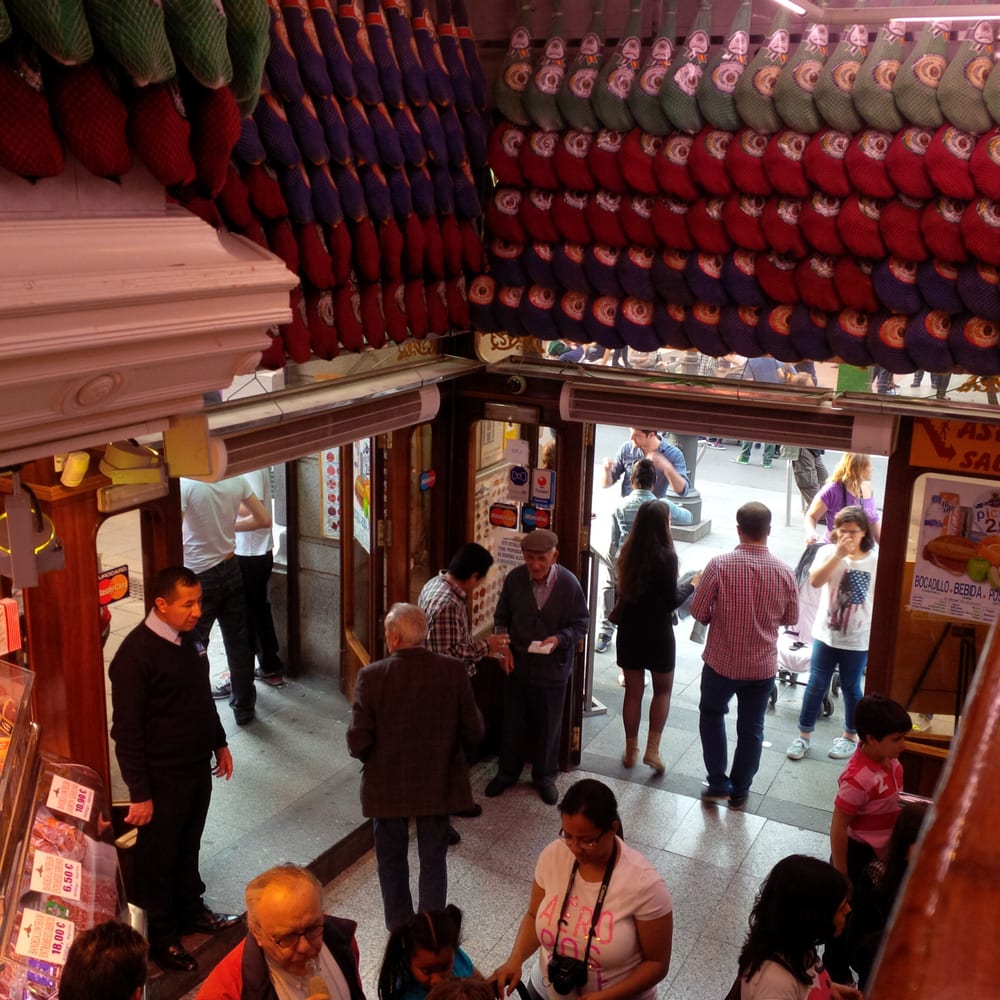
https://www.yelp.com/biz/museo-del-jam%C3%B3n-madrid-6
https://letstalkmadrid.com/museo-del-jamon-offer-1-euro-bocadillos/

-------------------------
https://www.yelp.com/biz/museo-del-jam%C3%B3n-madrid-6
https://letstalkmadrid.com/museo-del-jamon-offer-1-euro-bocadillos/


No comments:
Post a Comment